
This game meat ragu is a delicious pasta sauce option made with reindeer mince. Reindeer meat is wonderfully mild, yet possesses a unique flavour and a beautiful dark hue. Flavoured with juniper, cloves and hazelnuts, you can make this wonderful wild meat ragu with any game mince: moose, elk, venison or even wild boar. The spice and herb combination will pair nicely with all of them.
Reindeer meat is easily found in Sweden, where I live. It's harder to come by fresh, but most supermarkets carry it frozen. Minced reindeer is quite common, while the other most popular cut will be thinly sliced, known as renskav. This recipe will work even if you don't have access to reindeer, just go for your game meat mince of choice.

Ingredients and equipment

- Game meat mince
- Onion
- Carrots
- Olive oil
- Hazelnut meal
- Dried juniper berries
- Cloves
- Dried winter savoury
- Bay leaf
- Salt
- Red wine
- Tomato passata
For detailed quantities, please refer to the recipe card at the bottom of this post.
As for the equipment, I like to make my sauces in a Dutch oven. It works great from start to finish and has a capacity that is big enough for the amount of ingredients I'm working with. If you don't have one, choose a pot with a reasonably thick bottom, to prevent potential sticking and burning.
I am a big fan of my food processor so I recommend it to mince the carrots and onion for the soffritto. You can absolutely use a knife and cutting board instead, if you prefer.
preliminary step: Prepare the spices
In this recipe, I'm using whole cloves and dried juniper berries. When using ground you don't really need to think much about them, as they disappear in the final product. But using whole means dealing with small wooden bits that you don't want to accidentally bite on. To solve this problem I could be grinding them in a spice grinder. The quantities are just so small, though, that I don't feel it's worth the hassle.

So in order to use whole spices in a recipe and keep track of them in a nice way, I like to place them in a teabag, and let them infuse the tomato sauce as they cook together. I gently crush the whole cloves and dried juniper berries by pressing down on them with a knife held flat, then add them to a clean teabag. For best results I recommend to use a clean teabag, those that you can use for loose leaf tea, rather than washing a used teabag that has been previously used to brew tea.
How to make game meat ragu

1. Peel the carrots and onions and add them to a food processor fitted with the rotating blades. Start the food processor and blitz until finely minced. You may need to stop it from time to time to scrape the sides with a spatula for an even job.

2. Set a pot on medium heat, pour in the olive oil and heat it for about one minute. Add the minced vegetables and sweat on medium heat for 5 minutes, stirring occasionally and checking that it never sticks to the bottom of the pan.

3. Add the meat to the pot, raise the heat to medium-high and move it around to make sure all of it gets cooked. If it clumps up into meatballs, break them apart when stirring. When all the meat looks cooked through, stir in the salt and then add the red wine and keep stirring until it evaporates.

4. When the wine has evaporated, add the hazelnut meal, together with the winter savoury, the teabag with spices (see previous paragraph), the bay leaf and the tomato passata. I always add a little water to the passata bottle to rinse and add the tomato water to my pot.
5. Bring to a simmer, then lower the heat and keep on gentle simmer for one hour, stirring from time to time. To avoid red splashes I keep the lid on with a nice crack to let the steam escape. Remove the spice teabag and bay leaf before using or canning.

Tips and substitutions for game meat ragu
Generally speaking, game meat is leaner and has a deeper flavour than beef. How much obviously depends on the animal. Some game meats might be stronger than others, like wild boar, but the age and sex of the animal might play a difference there, too. In any case, the meat from wild animals tends to be leaner, so I like to up the fat game. This is the reason why I like to add hazelnut meal to my game meat, it's what I also did in my venison empanadas. If you are allergic to nuts, you may skip it.
Another thing that goes really well with game meat is juniper. Juniper berries might not be your everyday spice, but they are really really suited for a dish like this: a meat dish with a deep flavour. You may not be familiar with the use of such a spice as cloves in meat sauce, but it really gives even more depth. If you don't have them at hand, it will not be a tragedy. But if you make this recipe with these two, you will have a unique flavour profile. As for winter savoury, I like to use it as it's probably my favourite herb, but you can easily sub it with thyme.

Further recipe inspiration
Use this game meat ragù as a pasta sauce, for an elegant alternative to classic bolognese. You can make your own pasta or gnocchi from scratch. Or how about a very special lasagna? Click on the pictures below to explore more recipes.


If you tried this recipe, let me know your thoughts in the comments. If you're planning to try it another time, pin this recipe to Pinterest. Please consider subscribing to my newsletter and following me on Instagram and on Pinterest.


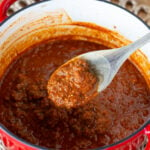
Game meat ragu
Equipment
- Dutch oven
- Knife
- Cutting board
- Food processor recommended, but not mandatory
Ingredients
- 500 g game meat minced
- 1 onion
- 2 carrots
- 4 tablespoon olive oil
- 25 g hazelnut meal
- 1 teaspoon dried juniper berries
- 4 whole cloves
- ½ teaspoon dried winter savoury
- 1 bay leaf
- 10 g salt
- 80 ml red wine
- 700 g tomato passata
Instructions
- Peel the carrots and onions and add them to a food processor fitted with the rotating blades. Start the food processor and blitz until finely minced. You may need to stop it from time to time to scrape the sides with a spatula for an even job.
- Set a pot on medium heat, pour in the olive oil and heat it for about one minute. Add the minced vegetables and sweat on medium heat for 5 minutes, stirring occasionally and checking that it never sticks to the bottom of the pan.
- Add the meat to the pot, raise the heat to medium-high and move it around to make sure all of it gets cooked. If it clumps up into meatballs, break them apart when stirring. When all the meat looks cooked through, stir in the salt and then add the red wine and keep stirring until it evaporates.
- When the wine has evaporated, add the hazelnut meal, teabag with spices (see notes), winter savoury, bay leaf and tomato passata. I always add a little water to the passata bottle to rinse and add the tomato water to my pot.
- Bring to a simmer, then lower the heat and keep on gentle simmer for one hour, stirring from time to time. To avoid red splashes I keep the lid on with a nice crack to let the steam escape. Remove the spice teabag and bay leaf before using or canning.
Notes
- In order to use whole spices in a recipe without the risk to lose track of them, you can place them in a teabag. This way they'll infuse the tomato sauce as they cook together. Gently crush the whole cloves and dried juniper berries by pressing down on them with a knife held flat, then add them to a clean teabag.
- The nutritional information shared is made with an online calculator and only meant to be used as a guideline.


