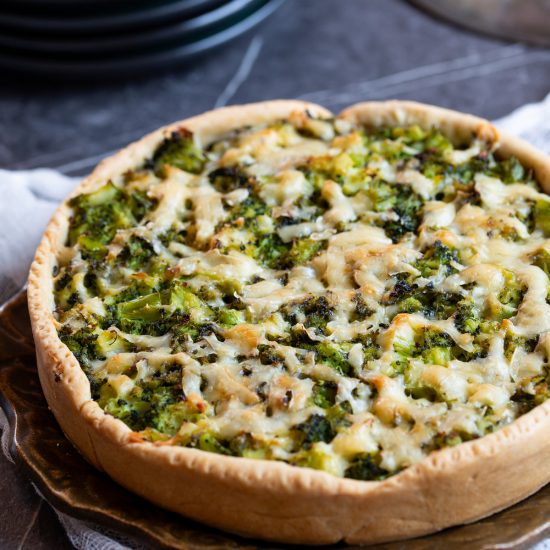
This simple vanilla custard recipe delivers a small batch of a thick rich vanilla cream. Enjoy it as a pudding, or use it to fill other desserts, such as shortcrust tarts, layer cakes or choux puffs. You only need 5 ingredients, and in rather small quantities, too.
I choose vanilla extract, as I find it very handy and I usually make my own. If you prefer, you may as well use a real vanilla bean. In that case, you will need to scrape it down in the milk. If using vanilla bean, you will have some dots in the cream; vanilla extract will deliver a smooth appearance. If using imitation vanilla extract (vanillin), you may need to lower the amount as it has a stronger and more pungent flavour.

This vanilla custard is made with egg yolks, so it has a beautiful yellow colour. If you want to use it as a filling, like in a fun birthday cake, you may add food colouring. Keep in mind that the yellow of its base may affect the final colouration.
The ingredients
Here are the ingredients needed to make this small batch of vanilla custard:

For detailed quantities, as well as conversion to American measurements, please refet to the recipe card at the bottom of this post.
How to make vanilla custard
Combine 200 ml of milk and the vanilla extract in a saucepan and set on the stove on medium heat.
Aside, combine the yolks with the sugar, cornstarch and 50 ml of milk. Beat with a hand mixer for a couple of minutes. You can do this while the milk is warming up, keeping an eye out for it to make sure it doesn’t boil.


When the milk is about to boil, pour the egg mixture in, lower the heat and stir until it thickens. I like to use a hand whisk for this passage. Keep stirring until the mixture boils. When you get a bubble of air steaming up from the bottom of the pot, remove it from the heat. Cover the cream with cling film (directly in contact with the cream, no air in between) and let cool to room temperature.
Vanilla custard tips
This recipe delivers a firm vanilla custard that you can pipe. Its firm texture makes it perfect for finger desserts, as it will not pour out once you bite into them. I find it also very good to use in shortcrust tarts, as it stays in place and make for easy portioning of the pie itself. Not all recipes call for a runny filling, and this vanilla cream is firm and thick and does an excellent job when you need a filling that stays put.
However, if you need to make it somehow runnier, you can always stir in a couple of tablespoons of whole milk or cream. An alternative would be to reduce the amount of cornstarch in the recipe, but it’s nothing I have tested myself. I would not recommend doing it without proper testing before.

Right after pouring the egg mixture into the warm milk, you may notice it takes some time to thicken, but once it starts, it will go pretty quickly. It is very important that you keep whisking to prevent lumps. If you get lumps, once you remove it from the heat, you can give it a quick go with a hand blender and you’ll regain a nice smooth texture.
Timing is also essential. You need to make sure you bring the custard to boiling temperature, that is when the big air bubbles start puffing out on the surface. Any sauce thickened with cornstarch needs to reach boiling, otherwise you may end up with a starchy aftertaste when it cools. At the same time, you need to make sure you remove it from the heat as soon as the first air bubble has come up, as the temperature in the pot is so high now that you risk burning the cream at the bottom of the pot.
How to use it
This vanilla custard is a delicious dessert as it is. Enjoy it when it is still warm, with a spoon, like a rich thick pudding.
However, I mostly use it as a filling. You can pretty much use it in any baked goods. Buy plain croissants and inject this cream with a piping bag. You can also make choux pastry and fill the puffs with this cream. Another big hit for me is to use it as a filling in layer cakes. Sandwich it between two layers of sponge cake and you have yourself a nice birthday treat.
My personal favourite is as tart filling. Come summer, there is nothing like a sweet shortcrust pie filled with vanilla custard and topped with any fresh fruit. Like these raspberry custard tarts.

If you tried this recipe, let me know your thoughts in the comments. If you’re planning to try it another time, pin this recipe to Pinterest. Please consider subscribing to my newsletter and following me on Instagram and on Pinterest.


Small batch vanilla custard
Ingredients
- 250 ml milk
- 70 g sugar
- 3 egg yolks
- 30 g cornstarch
- 2 tbsp vanilla extract
Instructions
- Combine 200 ml of milk and the vanilla extract in a saucepan and set on the stove on medium heat.
- Aside, combine the yolks with the sugar, cornstarch and 50 ml of milk. Beat with a hand mixer for a couple of minutes. You can do this while the milk is warming up, keeping an eye out for it to make sure it doesn't boil.
- When the milk is about to boil, pour the egg mixture in, lower the heat and stir (preferably with a hand whisk) until it thickens. Keep stirring until the mixture boils. When you get a bubble of air steaming up from the bottom of the pot, you can remove it from the heat. Cover the cream with cling film (directly in contact with the cream, no air in between) and let cool to room temperature.
Notes
- Right after pouring the egg mixture into the warm milk, you may notice it takes some time to thicken, but once it starts, it will go pretty quickly. It is very important that you keep whisking to prevent lumps. If you get lumps, once you remove it from the heat, you can give it a quick go with a hand blender and you’ll regain a nice smooth texture.
- You need to make sure you bring the custard to boiling temperature, that is when the big air bubbles start puffing out on the surface. Any sauce thickened with cornstarch needs to reach boiling, otherwise you may end up with a starchy aftertaste when it cools. At the same time, you need to make sure you remove it from the heat as soon as the first air bubble has come up, as the temperature in the pot is so high now that you risk burning the cream at the bottom of the pot.
- The nutritional information provided is made with an online calculator and only meant to be used as a guideline.